
Wellness in the Final Chapter: The Truth About Hospice Care
🌿With care in mind: This piece explores tender themes that may bring up strong feelings. You are not alone—take it in gently, with compassion for yourself, and pause if you need🌿
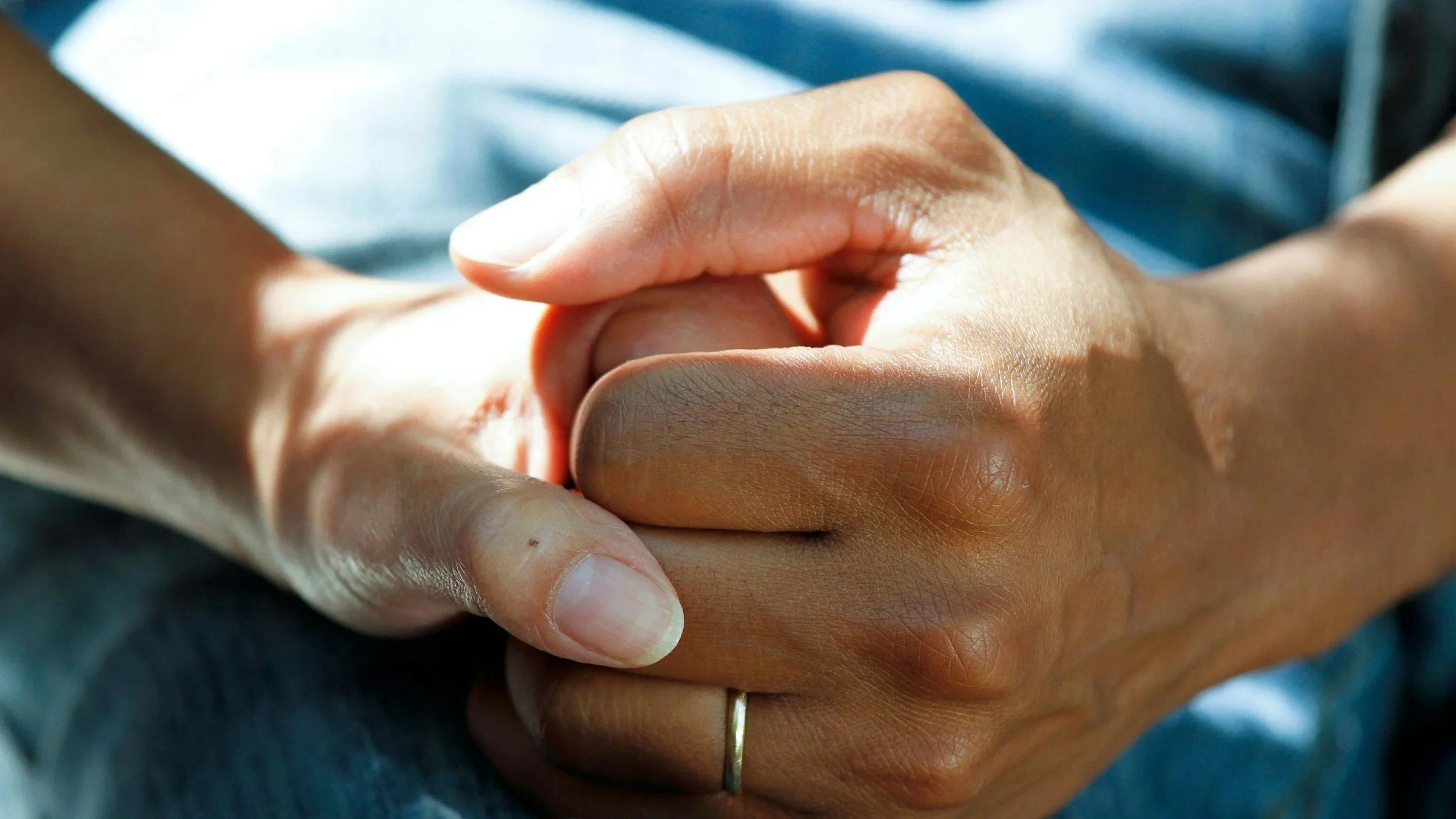
No one wants to talk about death and dying. ESPECIALLY those in their 20s and 30s. I’ll admit, I myself tend to think I’m invincible.
When someone young dies, it feels like a hit to my belief system. The same thing happens when a loved one dies. If you’ve been fortunate enough to not have lost a loved one—young or old—then you might not know what I’m talking about.
Nevertheless, this is a conversation everyone needs to be having because the ultimate truth is that we (and everyone we love) will die at some point. A scary thought, right?
Well, what if I told you that there are care systems in place to make the dying process more comfortable? Let me introduce: hospice care.
I had a firsthand experience with hospice when my uncle Mark (the father figure in my life) was diagnosed with cancer and later deemed untreatable. It felt like we, as a family, had given up the “fight” and were conceding to the inevitable.
It was incredibly heartbreaking and the term “hospice” felt so serious and permanent. Like we were already writing his name on a tombstone.
But the reality was: uncle Mark was not going to overcome cancer’s destruction, and he was going to die…soon. So, the goal quietly shifted from keeping him alive to making him as comfortable as possible near the end of his time on Earth.
Hospice provided him and my aunt Susie support, solace, and loving care. It was absolutely the right decision for his final months.
So, when I discovered that there is a lot of misinformation surrounding hospice care, it was truly alarming to me. Terms like euthanasia and assisted suicide have become synonymous with hospice.
To clear up confusion about what hospice care is and is not, I spoke with Julia Hospice & Palliative Care (JHPC) Board Advisor, Karen Adams.
“What we try to do is provide comfort, compassion, and care so that the quality of life is improved, but not the quantity,” Adams said. “We do not try to extend life at the mercy of quality.”
JHPC has been existing in Erie County since 2019 and, like other hospice organizations, they will use a team approach to care for patients and loved ones.
“A team approach means that you have a doctor who’s the Medical Director and a case manager who’s a Registered Nurse. They lead the team, and they are the two that must be involved,” Adams said. “All the other support services, the patient and their family can request or not.”
Additional supports include:
Aide who comes in to help with bathing, dressing, toileting, etc.
Social worker who provides social support and handles financial issues
Chaplain who serves anyone, regardless of religious background, to provide spiritual comfort
Bereavement counselor who can provide services for both the patient and their loved ones prior to death and after
Volunteer cohort who is trained to sit with patients and provide comfort and/or minor housekeeping duties
“Following the death of the patient, the hospice agency will follow up with the loved ones for 13 months to make sure everything is okay and if not, they will advise other services in the community that can be of assistance,” Adams said. “Every part of hospice is geared toward providing the best possible end of life care for the patient and for those who love the patient.”
Even though it’s clear that I’m in support of hospice care, I figured I shouldn’t be the only one to share my story. So, I had a conversation with Gwenn Freeman, whose mother was in hospice for a total of 17 days.
Freeman was surprised at how seamless her mom’s hospice care flowed, and how beneficial they were to her own health and wellness.
“Every day, someone was there to take mother’s vitals, bathe her, change her top, comb her hair, be with her,” Freeman said. “And they did it all in a very caring, gentle, kind way—like they were doing this for their own mother.”
In the midst of being beside her mom for her final days, Freeman had her own health scare when her blood pressure skyrocketed. The nurse tending that day, took Freeman’s blood pressure and immediately suggested she get on medication.
“Getting on blood pressure medication is not something that starts to work overnight, nor does your body just get used to it. It was like a lightning bolt hit me. I was dizzy and wobbling around my mother’s apartment,” Freeman recalled. “But the aides were there. They said these were the side effects and this is what you can do to cope.”
Not only did the hospice team tend to Freeman’s physical health, they also tended to her family’s emotional and spiritual health.
“It was a spiritual journey as well, so that was unexpected. You know, these women coming to your home and providing the kind of support you might need and guiding you on what to do next,” Freeman said. “When the end did come, it’s like they had totally prepared us. We weren’t anxious anymore. We were calm, and we knew what to expect.”
While Freeman’s mom was able to stay in her home leading up to her passing, the same may not be true for everyone. That’s why JHPC has been raising money for Julia House—the first standalone hospice facility in Erie County.
“It will be staffed 24/7 by hospice-trained personnel so they know specifically how best to serve the residents who will be there and their families,” Adams shared. “It will benefit those patients who are currently being cared for at home which is emotionally, mentally, and physically quite taxing on the caregiver.”
Julia House will provide nine patient suites, each with a private bathroom and patio. The suites will be family-orientated so that loved ones can spend the night with the patient if they so choose.
The team at JHPC is almost to their fundraising finish line and construction on Julia House will begin in 2026. “It’s been spectacular what we’ve been able to accomplish, but it still at times feels like we’re in a trench that we’re trying to climb out of,” Adams admits. “But I think the daylight is here.”
Freeman’s perspective on Julia House is fully supportive, as she recognizes that caring for aging parents or grandparents can be a full-time job.
“Having a facility that does that, and your being able to drop in or stay as long as you want, while knowing that your loved one is cared for the whole time, is a wonderful alternative,” Freeman said.
I know, personally, the toll caregiving took on my aunt. I worried about her almost as much as I worried about my uncle. JHPC will take their promise of “enabling the well-being of all in our community” to a whole new level with Julia House.
No, hospice care might not be at the top of our minds (hopefully it isn’t), but it’s still worth knowing about.
“Consider looking down the road and knowing that eventually, you will be there, either as a caregiver providing loving support or for yourself at the end of life,” Adams said. “We make final decisions out of love, and loving does include loss, unfortunately.”
Losing my uncle Mark was the hardest thing I’ve had to go through but no matter what I believe about death and dying, I know for certain that his hospice care team did exactly what was best for him and our family.
Rest in Peace
Mark DiVecchio (January 6, 1959 - March 6, 2023)
Annie Bool (March 1, 1925 - September 25, 2023)
📚Want to dive deeper? Here are books that Karen Adams recommends about spirituality, faith, grief, life, death, and beyond📚
A Grief Observed — C.S. Lewis
Death Is But a Dream — Christopher Kerr, MD PhD
Falling Upward: A Spirituality for the Two Halves of Life — Richard Rohr
Final Gifts — Maggie Callahan and Patricia Kelley
The Four Things that Matter Most — Ira Byock, MD
The Grace in Dying — Kathleen Downling Singh
How, Then, Shall We Live — Wayne Muller
I Wasn’t Ready to Say Goodbye — Brook Noel and Pamela D. Blair, PhD
The In-Between — Hadley Vlahos, RN
Nothing to Fear — Julie McFadden, RN
The Top Ten Things Dead People Want to Tell You — Mike Dooley
Tuesdays with Morrie — Mitch Albom
While I Breathe, I Hope — Richard R. Gaillardetz
🌿With care in mind: This piece is meant to share knowledge and spark reflection, rather than provide medical advice, treatment, or diagnosis. If you’re needing extra support, we encourage you to connect with a trusted medical or mental health professional🌿
