
Why We Need Superwomen in Film
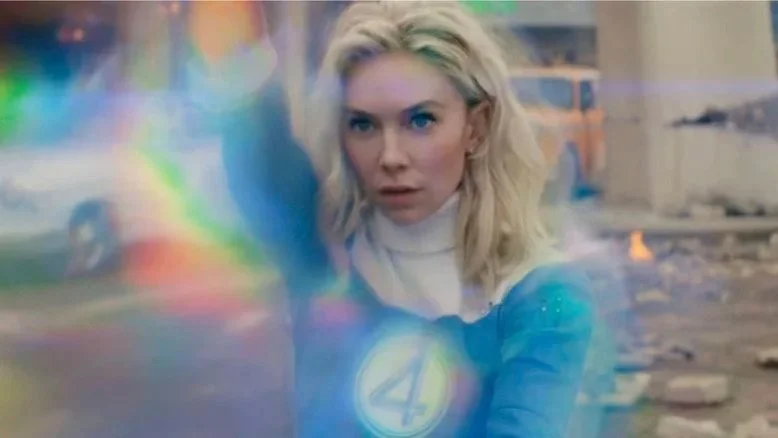
Photo Credit: Marvel Studios' The Fantastic Four: First Steps
When Marvel Studios’ The Fantastic Four: First Steps came out in July 2025 a bunch of essays, blogs, vlogs, posts, and think pieces followed on how Vanessa Kirby’s Sue Storm/the Invisible Woman was the breakout star of the team.
She was the most powerful member of the FF as well as their team leader and the ferocity of her love for her newborn son saw her, willingly and without hesitation, stand toe-to-toe with Galactus (Ralph Ineson), the cosmic force known as the Devourer of Worlds.
People were falling in love with the Invisible Woman left and right…but it wasn’t news to me.
As a kid who grew up reading comics in the ‘90s, I already knew Sue Storm was the most powerful member of the Fantastic Four. She was always my favorite character in their comics, too!
A lot of my favorite superhero characters during my childhood were women. Black Widow. She-Hulk. Namorita. Diamondback (if you want a real deep cut from Captain America lore). Crystal and Sersi. Lady Sif and the Enchantress (if you want a semi-deep cut from Thor lore). Storm, Psylocke, Rogue, and Jean Grey. The list goes on (but I’ll stop so this is more than just my nostalgic nerd-out).
I bring this up because we’re living in a fascinating time for superhero cinema. 2008 saw the dual release of Iron Man, Marvel Studios’ first blockbuster-to-redefine-culture, as well as The Dark Knight, Warner Bros.’ blockbuster-to-redefine-superhero-movies-and-cinema-at-large.
Suddenly superheroes and superhero movies were at the center of pop culture in a way that young me, a child of the ‘80s and a child and adolescent of the ‘90s, could never have imagined.
There has been an intentional move to diversify the characters we see on screen, too. For as epic an experience as 2018’s Avengers: Infinity War was, with the exception of the scenes set in the African utopia of Wakanda, it showed the Marvel Cinematic Universe (MCU) was painfully white and male dominated.
Speaking to the importance of representation in her brilliant text Superwomen: Gender, Power, and Representation, Carolyn Cocca writes:
“While you do not have to have the perfect demographic match with a fictional character to identify with her or him, seeing someone who looks like you can have a positive impact on self-esteem and seeing no one who looks like you can have a negative impact on self-esteem. You are more likely to imagine yourself as a hero if you see yourself represented as a hero. Marginalized groups have been forced to “cross-identify” with those different from them while domination groups have not.[1] ”
Or, in a more personal way, a mother, Mary, beautifully explains this importance of representation in her letter to Ryan North and artist Erica Henderson, the writer and artist of The Unbeatable Squirrel Girl, via the comic’s letters page, “Letters To Nuts.” She said, in part:
“I have always read comics to my daughter, Nova. Even when I was pregnant with her. When she was two, she developed her first favorite, which was The Amazing Spider-Man. At three, she had a heart-wrenching breakdown in the back of the car, sobbing hysterically that when she grew up she wanted to be Spider-Man but she couldn’t be Spider-Man because she was a girl. Despite our best efforts at gender neutral parenting tactics, we could not console her…A few months passed, and my friend suggested we pick up The Unbeatable Squirrel Girl and generously donated the first four issues. Man was she hooked. When the time came to pick out a Halloween costume, it was no contest. Eat nuts and kick butts all day long.
Thank you for providing a role model for our little girl. Thank you for having my back when I told her girls can be awesome superheroes too. Thank you for the laughs. Even though working with faux fur was a battle in itself.[2]”
I cry every time I read her letter! And it underscores how important what Marvel Studios has been doing since they wrapped their first decade of stories with 2019’s Avengers: Endgame really is.
Since Endgame, the MCU’s given us the heart-wrenching Elizabeth Olsen-led tale of loss, grief, and moving through trauma that was WandaVision (2021). But they didn’t stop there.
Following in WandaVision’s wake was the Scarlett Johansson and Florence Pugh-led Black Widow (2021), which took a story framed by the horror of young women being trafficked and their bodily autonomy stripped away and created a tale of humor, resiliency, hope, and the best-found family narrative in the Marvel Cinematic Universe thus far.
Then 2022 brought the Iman Vellani-led Disney+ series, Ms. Marvel, a quirky, nerdy, heartfelt coming-of-age story with the best lighting-in-a-bottle casting in Vellani as Kamala Khan the MCU’s had since Robert Downey Jr. became Iron Man.
Natalie Portman also took up the hammer herself in 2022 as the Mighty Thor alongside Chris Hemsworth in Thor: Love and Thunder.
And OH MY GOSH we have Tatiana Maslany as the titular gamma-green She-Hulk: Attorney at Law (2022), in the MCU’s hilarious legal sitcom, where Jennifer Walters has to help superpowered clients in between her own Hulk-outs and dealing with incel assholes hounding her.
Letita Wright’s Shuri/the Black Panther, Danai Gurira’s Okoye, and Angela Bassett’s Queen Ramonda return, alongside Dominique Thorne’s Riri Williams/Ironheart, for another tale of mourning and healing in 2022’s Black Panther: Wakanda Forever, where the MCU grieved the death of T’Challa, the King of Wakanda, and we mourned the passing of Chadwick Boseman, the actor who played the Black Panther, in real life.
While the SAG-AFTRA strike kept the cast from doing the talk show rounds to promote it, I will die on the hill that Nia DaCosta’s The Marvels (2023)—with Brie Larson’s Carol Danvers/Captain Marvel, Iman Vellani’s Kamala Khan/Ms. Marvel, and Teyonah Parris’ Monica Rambeau—is one of the most comic book comic book movies ever made, too.
This centrality of women superheroes isn’t limited to Marvel Studios either. Patty Jenkins directed one of the most powerful stories about the salvific power of love in 2017’s Wonder Woman, starring Gal Gadot.
Then 2020’s really divisive sequel, Wonder Woman 1984, had the courage to make the character of Max Lord (Pedro Pascal) a direct allegory for Trump and ask if he could be redeemed.
Last but certainly not least, I must mention the Clown Princess of Coney Island, Harley Quinn. For years I taught a course using comic books and comic book movies to examine issues of social justice. One of the most universally beloved films I ever taught was 2020’s Birds of Prey (and the Fantabulous Emancipation of One Harley Quinn).
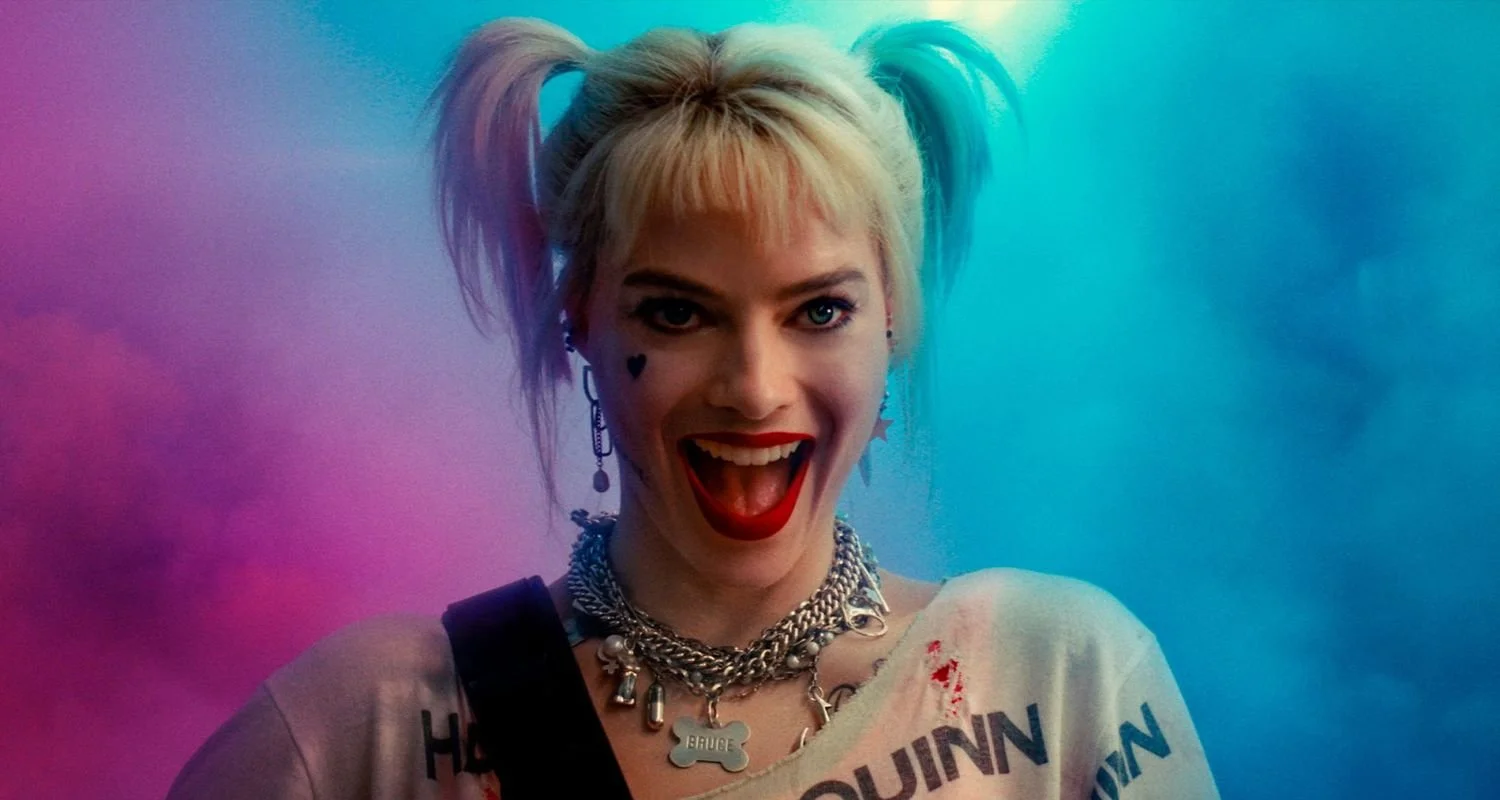
Photo Credit: Warner Bros. Pictures' Birds of Prey (and the Fantabulous Emancipation of One Harley Quinn)
It’s historic, as the first comic book movie ever written (Christina Hodson) and directed (Cathy Yan) by women. Starring Margot Robbie as Harley Quinn, a survivor of domestic violence trying to put her life back together after ending her abusive relationship with the Joker, my students were enthralled by her acting, marveling at how completely different she was as Harley—accent, mannerisms, movements, etc.—than she was as Barbie.
My students were also inspired by Harley. They loved her for being a mess and for working to put herself and her life back together. They felt, unlike most superheroes they see (especially with their godlike powers), she was someone they could aspire to be. Harley felt more relatable, more real (her love for her cheese sandwich in particular being a point of bonding ;D) and they loved rooting for her!
All this is to say we have seen this blossoming of female-led superhero stories on the big and small screen over the last six years and it’s been an amazing thing. It makes my old comic-lovin’ heart happy.
Unfortunately, we’re living in the 2020s and the internet is a thing so all of those films and shows dealt, in some way, with review bombing and hate-posting across social media platforms and YouTube channels.
The films that were the most unapologetically feminist—films like Captain Marvel, Birds of Prey, and The Marvels—were hit the hardest. The fury around She-Hulk: Attorney at Law is STILL raging online, in part because it made the online trolls guaranteed to attack the show for existing the literal villains in the story.
This is the way social media works though, right? In his mind-blowing book Ten Arguments for Deleting Your Social Media Accounts Right Now, Jaron Lanier—a scientist who’s taught computer science at Berkley for years, works in Silicon Valley, and was a pioneer in the field of VR as well as the early internet—clearly explains why social media algorithms amplify the worst of us.
I can’t give a citation like I usually do as I’m summarizing what he lays out over the course of the entire book. It’s a tiny book and I’d encourage you to read it yourself, especially if you’ve ever used social media.
In short, social media is free for us to use so those companies must make their money in other ways. They do that by selling users attention to the companies who pay for advertisements. Essentially, the longer we scroll and the more targeted the ads become, the more likely we’ll buy something. Each and every one of us with a social media account (myself included) are products, being sold by that platform to advertisers.
Evolutionarily speaking, we are more inclined to remember and we react more quickly to things that make us scared or angry (for survival purposes), so social media algorithms boost posts that do just that.
To hold our attention, all social media is literally designed to make us scared and angry and it boosts accounts that do so, unintentionally (as the intention is our attention, not evilness) giving the biggest platform to the worst parts of ourselves.
Whew!
So, as the age of superhero cinema has grown and we’ve entered into this era of increasingly diversified voices behind the camera and characters on screen, we’ve simultaneously entered an era defined by social media use where we’ve seen a tiny section of online trolls who are scared the presence of any non-white, non-male, non-cishet character is a threat to their own relevance and thus lash out in anger and fear.
Given how social media is designed to function and the reality of bots and echo chambers, their voices are amplified giving the perception of more people endorsing those hateful views than really do.
Adding this to the short timeframe films are in theatres anymore and how central the box office results are taken by fans and studios alike, it’s left us with biased narratives around “how female-led superhero stories” perform.
It is exhausting and maddening but this is the world we live in and the fight goes on.
The thing is…this sort of reality is exactly why we need hero stories in the first place.
Joseph Campbell, one of the 20th century’s leading experts on comparative mythology explains, “One thing that comes out of myths, for example, is that at the bottom of the abyss comes the voice of salvation. The black moment is the moment when the real message of transformation is going to come. At the darkest moment, comes the light.”[3]
The hero shows us the path to such salvation via their heroic deeds.
“One is the physical deed, in which the hero performs a courageous act in battle or saves a life. The other kind is the spiritual deed, in which the hero learns to experience the supernormal range of human spiritual life and then comes back with a message….That’s the basic motif of the universal hero’s journey – leaving one condition and finding the source of life to bring you forth into a richer or mature condition.[4] ”
For this salvific message to take effect though we must participate with it. The truth the hero finds can only save us if we are willing to accept and live it.
Campbell discusses this reality with journalist Bill Moyers:
Moyers: “What if the hero returns from his ordeal, and the world doesn’t want what he brings back?”
Campbell: “That, of course, is a normal experience. It isn’t so much that the world doesn’t want the gift, but that it doesn’t know how to receive it and how to institutionalize it –”
Moyers: “– how to keep it, how to renew it.”
Campbell: “Yes, how to help keep it going.”[5]
Each and every superhero movie we watch can be escapist fantasy. Superhero stories are great at that! But they can also be something more, as I explored in my class for many years.
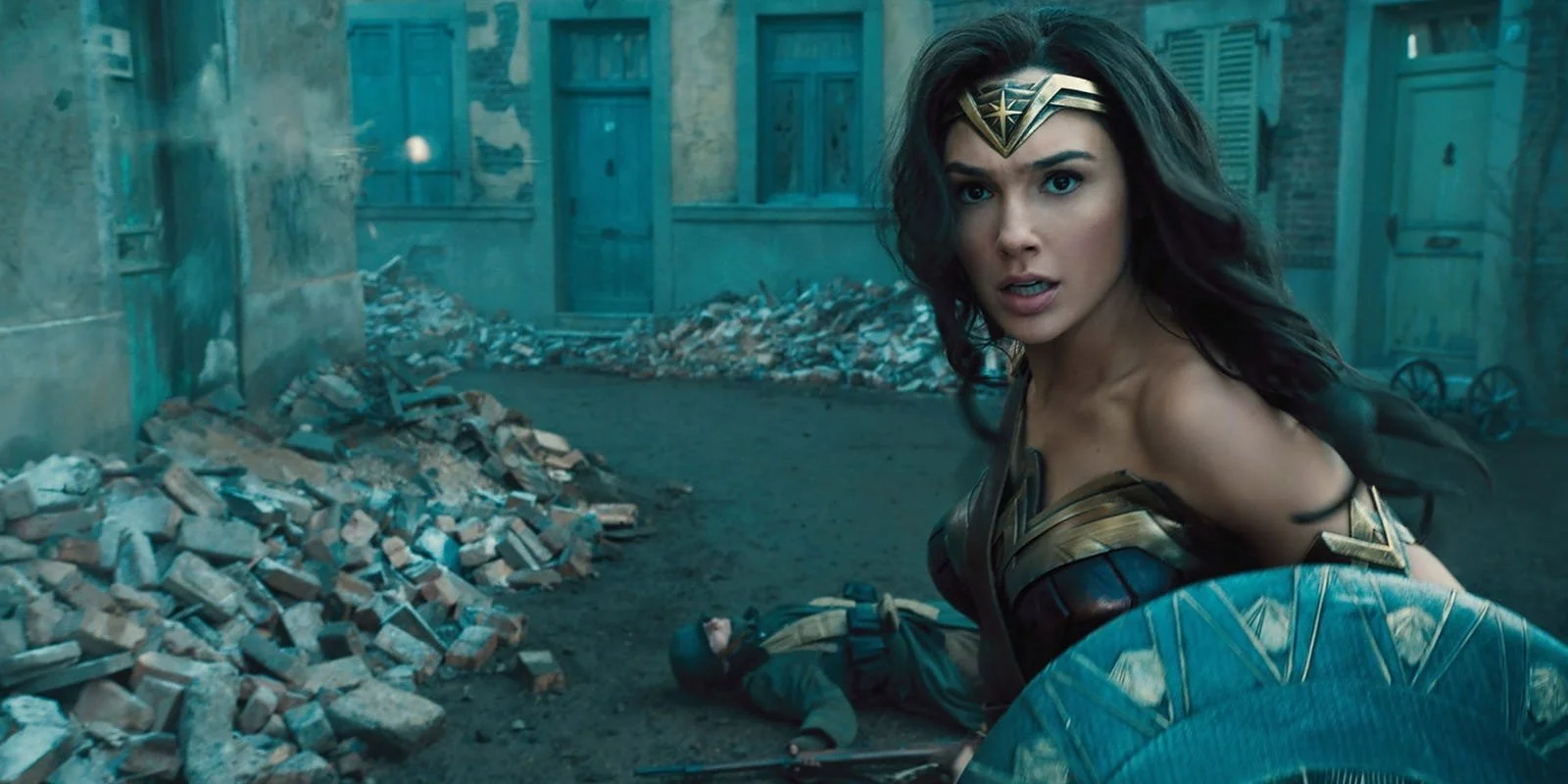
Photo Credit: Warner Bros. Pictures' Wonder Woman
Superhero stories—the special ones, with the right creative minds and vision behind them—can offer us this alternative wisdom to create a better, more just society for all.
In The Fantastic Four: First Steps, Sue Storm looked a cosmic space god bent on devouring the planet or taking her son in the eyes and dared him to blink. That resonated with viewers, as did Wanda’s journey with grief in WandaVision, Diana’s liberative efforts in Wonder Woman, Shuri’s moving through her own pain to protect her people and country in Black Panther: Wakanda Forever, and Harley’s messy approach to healing and heroics in Birds of Prey.
Each story gives us a vision of power, humanity, and justice. Each film does so while also broadening the audience who can self-identify with the heroes on screen. It’s exciting. It’s fun. It speaks to a better world.
The question remains, will we receive this message? Will we renew it? Will we keep it going?
📚Want to dive deeper? Here are the studies and books that informed this article📚
[1] Carolyn Cocca, Superwomen: Gender, Power, and Representation (New York: Bloomsbury Academic, 2016), 3.
[2] Ryan North (w.) and Erica Henderson (a.), The Unbeatable Squirrel Girl no. 3, vol. 2 (Marvel, March 18, 2015).
[3] Joseph Campbell and Bill Moyers, The Power of Myth. (New York: Anchor Books, 1991), 46.
[4] Campbell and Moyers, 152.
[5] Campbell and Moyers, 173.
